

Key Takeaways
A suitable used differential can be a sensible repair choice, but only when its fitment and condition are properly verified.
- Confirm the model year, transmission, axle ratio, and vehicle identification number before buying.
- Ask for clear identification numbers, photographs, and written details about the part’s condition.
- Inspect the casing, gears, bearings, seals, mounting points, and fluid condition.
- Compare the purchase price with freight, fitting, fluids, warranty, and possible return costs.
- Have a qualified technician confirm compatibility and test the replacement after installation.
Understanding Fiat Ducato differentials and compatibility
A differential allows the driven wheels to rotate at different speeds while the vehicle turns. In a Fiat Ducato drivetrain, it works with the transmission and final drive to transfer engine torque to the wheels. That makes correct identification more than a matter of finding a part that looks similar. For anyone searching for Used Fiat Ducato differentials Ballarat – genuine parts only, compatibility should be established before price becomes the deciding factor.
What the differential does in a Fiat Ducato drivetrain
The differential sits within the final-drive assembly and helps distribute torque between the driven wheels. It also works with the axle gears to reduce rotational speed and deliver usable drive to the wheels. Wear in these components can affect noise, smoothness, and the way the vehicle responds under load. Because the differential is part of a larger drivetrain, symptoms may overlap with problems in the gearbox, driveshafts, wheel bearings, or hubs.
How model year and generation affect fitment
Ducato versions can differ in casing design, mounting arrangements, engine specification, transmission, and final-drive gearing. A part removed from a similar-looking van may still have a different internal ratio or attachment pattern. Model year alone may not be enough, especially where vehicles were updated during a production run. Use the full vehicle details and the original part identification rather than relying on photographs or a broad model description.
Manual and automatic transmission considerations
Transmission type can affect the differential assembly that is suitable for the vehicle. Manual and automated transmission variants may use different housings, gear arrangements, or control-related components around the final drive. The replacement should be matched to the transmission actually fitted, not simply to the engine size. If the seller cannot state the transmission configuration of the donor vehicle, treat the listing as incomplete until that information is confirmed.
Why the axle ratio matters
The axle ratio determines how many times the driveshaft turns in relation to the wheels. A mismatch can alter engine speed at road speed and may affect acceleration, cruising behaviour, fuel use, and drivetrain operation. Even if the casing bolts into place, an incorrect ratio can make the replacement unsuitable. Ask for the ratio or the relevant identification number and have a technician compare it with the original unit.
Common signs of differential wear or failure
Whining that changes with acceleration or deceleration, clunks when taking up drive, and vibration under load can point to final-drive trouble. Dark or metallic fluid may indicate internal wear, although fluid condition alone cannot prove the source. Leaks around seals and mounting areas also deserve attention. A proper diagnosis should separate differential noise from wheel-bearing, tyre, driveshaft, and transmission faults before a replacement is purchased.
Finding used Fiat Ducato differentials in Ballarat
The Ballarat area may offer several ways to source a used drivetrain component, from dismantlers and repair businesses to specialist parts sellers. Availability can change quickly, so a phone conversation often provides more useful information than a short online listing. Begin with the vehicle details and the exact assembly required. This makes it easier to compare like-for-like parts rather than collecting vague prices.
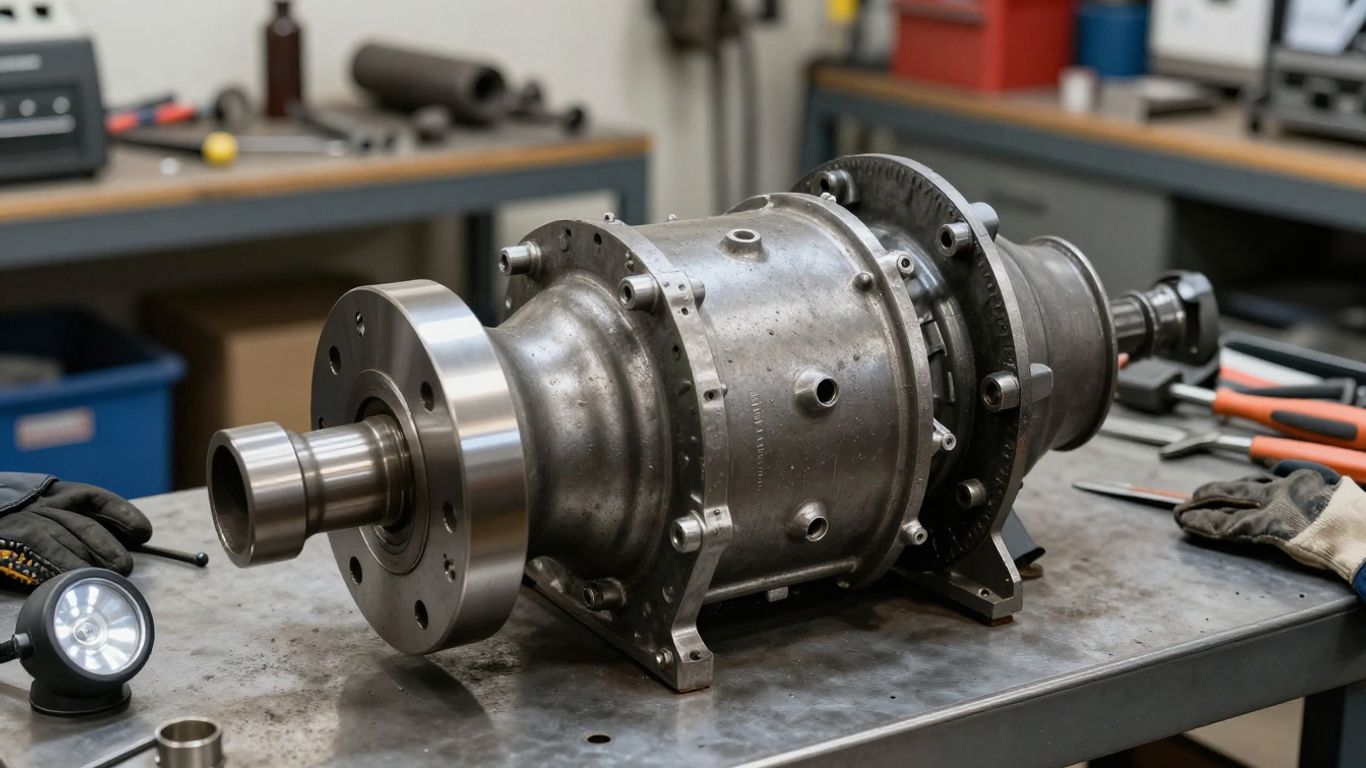
A local purchase may allow you to inspect the component or arrange collection, while a shipped part can broaden the search beyond nearby stock. Either option can work when the seller provides traceable identification and clear terms. The key is to verify the part before committing to labour or freight.
Local suppliers, wreckers, and specialist dealers
Local dismantlers may have access to donor vehicles and can sometimes provide useful details about the source vehicle. Specialist dealers may offer more structured records, photographs, and written warranty terms. A repairer may also know which assemblies commonly interchange, although informal advice should still be checked against the vehicle identification number. Ask whether the part is genuinely used, rebuilt, or merely described as tested without supporting detail.
What vehicle details to provide when requesting a part
Give the seller the model year, body style, engine, transmission type, drive configuration, and vehicle identification number where appropriate. Include the original differential or gearbox identification number if it can be read safely. Photographs of the casing, mounting points, and labels can help, but they should support—not replace—the written specifications. The more precise the request, the less likely it is that a similar but incompatible unit will be offered.
A concise specification table can make enquiries easier to compare across several sellers.
| Detail to provide | Why it matters | Useful source |
|---|---|---|
| Model year and generation | Narrows the likely casing and fitment | Registration or vehicle records |
| Engine and transmission | Helps identify the correct drivetrain assembly | Service records and vehicle data |
| Vehicle identification number | Supports a direct fitment check | Vehicle plate or documents |
| Original part number or ratio | Confirms the internal and external match | Existing unit or workshop inspection |
After sending these details, ask each seller to reply against the same information. A confident answer should explain what was matched and identify any uncertainty rather than simply saying the part “should fit.”
Comparing local pickup with shipped options
Local pickup can reduce freight risk and may give you the chance to inspect the casing before payment. Shipping can be useful when local stock is limited, but a heavy differential needs secure packaging and an agreed procedure for reporting transport damage. Request photographs taken before dispatch and ask whether the carrier’s handling is covered by the seller’s terms. Keep the packaging until the component has been checked and accepted.
Questions to ask about stock availability
Ask whether the advertised unit is physically in stock, where it was removed from, and whether it is being held for another customer. Confirm whether the price covers the complete differential or only a housing, gear set, or related component. It is also worth asking for the mileage of the donor vehicle, the reason it was dismantled, and the date of the inspection. These answers help distinguish a documented part from a listing created from incomplete yard records.
How to verify a seller’s experience with Fiat Ducato parts
Experience is best shown through precise answers rather than broad claims. A knowledgeable seller should be able to discuss identification numbers, transmission differences, axle ratios, photographs, and return conditions without avoiding the details. Ask for the seller’s process for checking fitment and for written confirmation of what is included. If the response remains generic after you provide the vehicle data, continue carefully or obtain an independent technical opinion.
Verifying genuine Fiat parts before purchase
The word “genuine” should be treated as a claim that needs evidence. A used original-equipment component may have markings, a casting reference, or a supplier record that helps establish its identity. Those details do not guarantee good condition, but they create a trail for checking the part. Before paying, ask for enough information to distinguish the actual component from a generic photograph or an incorrectly catalogued listing.
Original equipment markings and identification numbers
Look for cast numbers, stamped references, labels, and other markings on the housing or attached components. Photograph them clearly, including the surrounding area so the markings can be linked to the part being sold. Numbers can be difficult to read after cleaning or corrosion, so ask for an additional close-up if necessary. Do not assume that a familiar-looking casing is genuine without matching the identification details to reliable vehicle or parts information.
Matching the differential to the vehicle identification number
The vehicle identification number provides a useful starting point for checking the vehicle’s original specification. A supplier should be able to explain whether the proposed differential was matched directly to that information or only selected by model description. If the original vehicle has been modified, imported, or repaired with a replacement drivetrain, the identification number may need to be checked alongside the physical part. A qualified technician can resolve discrepancies before installation begins.
Distinguishing genuine parts from aftermarket alternatives
An aftermarket component is not automatically defective, but it should not be presented as an original-equipment part. Ask the seller to state plainly whether the item is original, rebuilt, remanufactured, or aftermarket. Check whether the photographs show the exact unit and whether its markings agree with the description. Clear wording protects the buyer from paying a genuine-parts price for a different type of component.
Checking manufacturer and supplier documentation
Useful documentation may include a dismantling record, donor vehicle details, inspection notes, identification photographs, and a written invoice. For a rebuilt unit, ask what was replaced, measured, or adjusted and who performed the work. Documentation should identify the part being sold rather than provide only general information about the supplier. Keep all messages and paperwork because they may be needed if fitment or warranty questions arise later.
Warning signs of incorrectly labeled components
Be cautious when a listing uses several model names without giving a part number, ratio, transmission detail, or donor vehicle. Other warning signs include stock photographs, blurred markings, unexplained differences between the image and description, and pressure to pay before questions are answered. A low price is not proof of mislabeling, but uncertainty should be reflected in the price and the written terms. If the seller will not identify what is included, do not treat the part as verified.
Inspecting a used differential before buying
A used differential can look clean externally and still contain worn bearings or damaged gears. Inspection should therefore cover the casing, internal condition where accessible, seals, mounting points, and evidence of storage or transport damage. Ask what was checked and when, rather than accepting the word “tested” without explanation. The goal is not to make a complete workshop diagnosis at the seller’s premises, but to reduce avoidable risk before purchase.
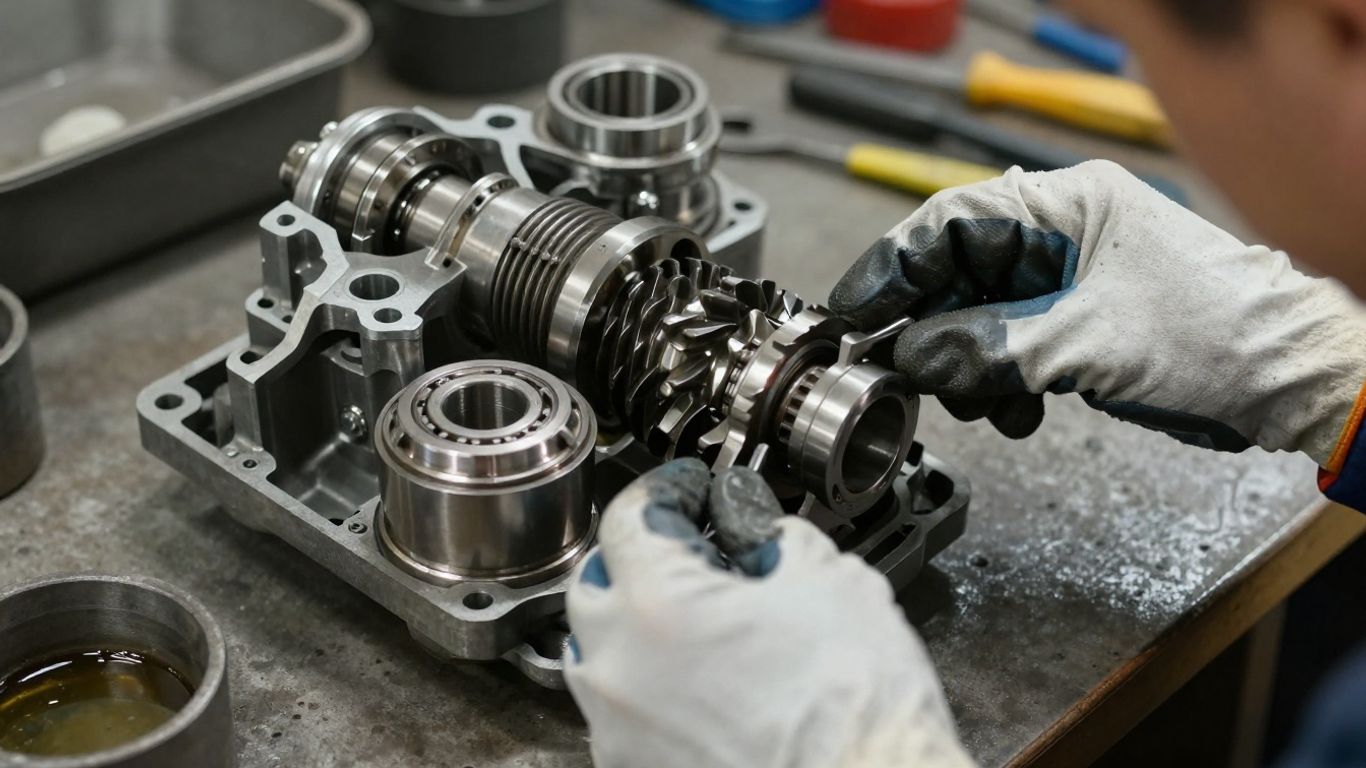
Photographs are useful when a local inspection is not possible, particularly if they show the actual part from several angles. They cannot reveal every internal fault, so a warranty and professional assessment remain valuable. Arrange inspection before installation whenever the cost of removing the old unit would be significant.
Reviewing casing condition and signs of impact damage
Inspect the casing for cracks, deep gouges, distorted mounting ears, damaged threads, and fresh repairs. Impact damage can affect alignment even when the assembly still turns by hand. Look closely around flanges, drain plugs, brackets, and mating surfaces because these areas may be damaged during removal or transport. Surface grime is usually less concerning than unexplained sealant, weld marks, or a casing that does not sit flat.
Checking gears, bearings, seals, and mounting points
Where access permits, rotate the input and output components slowly and feel for roughness, tight spots, or excessive play. Examine the gear teeth for pitting, chipped edges, unusual polishing, or scoring. Seals should not be visibly torn or heavily hardened, and mounting points should be complete and undamaged. These checks are preliminary; quiet rotation by hand does not prove that the unit will remain quiet under load.
Assessing fluid contamination and corrosion
Drainage evidence can reveal whether the unit contained fluid, whether the fluid was heavily contaminated, and whether water or metal particles may be present. Milky fluid can suggest water contamination, while glitter or fragments may indicate internal wear. Rust on external surfaces may be cosmetic, but corrosion around bearings, gears, plugs, or machined faces is more serious. Ask how the unit was stored and whether openings were sealed after removal.
Understanding inspection reports and photographs
A useful inspection report states what was examined, what could not be examined, and who carried out the check. Phrases such as “turns freely” or “looks good” are less informative than measured play, identified leaks, clear gear photographs, and notes about noise testing. Compare the report with the exact component shown in the images. If the photographs are old, generic, or missing the identification markings, request current images before proceeding.
When a used differential should be professionally tested
Professional testing is sensible when the differential is expensive, difficult to fit, or being shipped without a comprehensive warranty. It is also advisable when the original failure involved metal contamination, severe noise, collision damage, or an unexplained loss of drive. A technician can assess compatibility and determine whether further internal examination is justified. The testing cost is usually modest compared with paying for removal and installation twice.
A component that fits physically is not necessarily a component that is correct for the drivetrain.
That distinction is especially important when a replacement has not been matched by ratio, transmission, and identification number. Professional confirmation can prevent an apparently cheap purchase from becoming a larger repair.
Evaluating price, warranty, and overall value
The purchase price is only one part of the replacement decision. A cheaper unit may carry greater uncertainty, while a more expensive component may include better records, testing, or protection if it proves incompatible. Compare the complete cost and the level of evidence supplied with each option. Value comes from reducing the chance of repeat labour as much as from saving money at the time of purchase.
Comparing used genuine parts with rebuilt units
A used original-equipment differential may retain its factory configuration, but its remaining service life depends on use, maintenance, storage, and internal wear. A rebuilt unit may have selected components replaced or adjusted, although the quality of the rebuild must be documented. Ask what work was completed and whether measurements or parts records are available. Compare the warranty period and return process as carefully as the initial price.
What should be included in a written warranty
A written warranty should identify the part, the covered failure, the duration, and the conditions that apply after installation. It should state whether labour, freight, seals, fluids, or consequential costs are excluded. Ask how a claim is started, who pays for inspection, and whether the seller requires installation by a qualified workshop. Verbal assurances are difficult to rely on when a heavy drivetrain component needs to be removed again.
Core exchanges, returns, and compatibility guarantees
Some suppliers require the old unit to be returned as a core, while others sell the replacement outright. Confirm the deposit, return deadline, acceptable condition, and transport responsibility before paying. A compatibility guarantee should say which vehicle details were used to approve the part and what happens if the information supplied was correct but the component does not fit. Do not assume that a return right covers a part that has already been installed or modified.
Factoring in freight, installation, and fluid costs
Add the cost of delivery, collection, lifting, labour, seals, fasteners, and the specified lubricant. There may also be diagnostic time if the original noise or vibration has more than one cause. A local part can be cheaper overall even when its listed price is higher, while a shipped unit may make sense when it comes with stronger documentation and warranty protection. Write down the full estimate before comparing offers.
Recognizing unusually low prices and incomplete listings
An unusually low price may reflect a bare housing, unknown mileage, missing hardware, poor storage, or no meaningful warranty. It may also be a genuine clearance opportunity, but the explanation should be clear and verifiable. Be wary of listings that omit the ratio, donor vehicle, condition, or exact contents while using confident language about fitment. If the seller cannot answer basic questions, the apparent saving may disappear once freight and workshop time are included.
Installing and maintaining a replacement differential
Installation should follow a confirmed diagnosis and a documented fitment check. Removing the old unit before verifying the replacement can leave the vehicle unavailable while a mismatch is sorted out. The workshop should compare the assemblies, inspect related drivetrain components, and record any concerns before final installation. Good preparation is less dramatic than a rushed repair, but it prevents many avoidable delays.
Choosing a qualified Fiat Ducato technician in Ballarat
Choose a technician who is comfortable working on commercial vans and driveline components, and ask whether they have access to the information needed to confirm ratios and tightening procedures. The workshop should be willing to inspect the replacement before fitting it. Ask for a written estimate that separates diagnosis, removal, installation, fluids, and any additional repairs. Clear communication matters because differential faults can overlap with other drivetrain problems.
Confirming the replacement before removal of the old unit
Before the vehicle is dismantled, compare the replacement’s casing, flanges, mounts, connectors, identification numbers, and ratio with the original. Check that all supplied parts are present and that transport has not caused fresh damage. If there is a discrepancy, pause and contact the supplier while the evidence is clear. This simple step can avoid paying workshop labour to remove a unit that was never suitable.
Using the correct lubricant and installation procedures
The lubricant specification and fill level should come from the appropriate vehicle or component information, not from guesswork. Clean mating surfaces, use suitable seals and fasteners, and follow the required tightening sequence. The technician should also inspect driveshafts, mounts, and related seals because a worn adjacent component can damage or mislead the replacement. Record the fluid used and the installation date for future servicing.
Checking alignment, noise, and vibration after installation
After installation, the vehicle should be checked for leaks, abnormal backlash, vibration, and noise during controlled driving conditions. Changes under acceleration, coasting, and cornering can help identify whether the repair has addressed the original symptom. Recheck fluid level and mounting hardware according to the workshop’s procedure. If a new noise appears, stop investigating early rather than assuming the component simply needs to settle.
Maintenance practices that can extend differential life
Regularly inspect for leaks and address them before the lubricant level falls. Use the specified fluid, avoid overloading the vehicle, and pay attention to new whines, clunks, or vibration. Servicing intervals should reflect the vehicle’s use, including towing, heavy payloads, and frequent short trips. Keeping records of fluid changes and repairs makes later diagnosis easier and may support warranty discussions.
Conclusion
Buying used Fiat Ducato differentials in Ballarat becomes a much safer process when genuine-part claims are checked, fitment is matched to the vehicle, and the component is inspected before installation. A careful comparison of condition, documentation, warranty, freight, and workshop costs will usually reveal which option offers real value rather than merely the lowest advertised price.







