

Key Takeaways
A cash-and-carry purchase can make a Fiat 500 repair more affordable, but the cheapest part is not always the best value.
- Confirm the exact Fiat 500 model, engine, trim, and part number before searching.
- Inspect used parts carefully for damage, corrosion, missing hardware, and signs of wear.
- Compare the total cost, including collection, tools, fitting, and possible return expenses.
- Bring suitable tools and protective equipment if you need to remove a part yourself.
- Ask about testing, warranty coverage, returns, and whether the part is ready to fit.
Understand the cash-and-carry used-parts market
Buying used parts locally can be a practical way to keep an older Fiat 500 on the road without paying full new-part prices. Cash and carry usually means you identify a suitable component, pay for it, and collect it yourself or arrange transport. The process is more hands-on than ordering a boxed replacement, so a little preparation pays off.
What cash and carry means for Fiat 500 buyers
For a buyer, cash and carry generally means purchasing an already-removed part from a recycler, dismantler, or wrecking yard and taking responsibility for collection. Some sellers may help load larger items, while others expect the customer to bring tools and remove the part from a donor vehicle. Clarify the arrangement before travelling, particularly if you are looking for an engine, door, seat, or other bulky component.
The useful advantage is immediacy. You can often see the actual part rather than relying only on a catalogue photograph, discuss its condition, and decide whether it suits your repair. The trade-off is that availability, removal requirements, and return terms can vary from one seller and part to another.
Why recycled parts can cost less than new replacements
A recycled part has already had a first service life, which is one reason it can sell for less than a new genuine replacement. The price may also reflect cosmetic marks, limited remaining wear life, or the fact that the part has been removed from a vehicle being dismantled. For a small cosmetic repair or a non-critical trim item, those compromises may be perfectly reasonable.
The saving is only useful when the part is suitable. A low purchase price can disappear if the component needs repainting, missing fasteners, extra seals, specialist programming, or several hours of avoidable fitting work. Treat the asking price as the starting point, not the complete repair budget.
Common Fiat 500 parts available from auto recyclers
Auto recyclers may have body panels, doors, bumpers, mirrors, lights, wheels, interior trim, seats, switches, cooling components, and mechanical assemblies. Stock changes constantly, and two parts that look alike may still differ because of model year, engine, transmission, trim level, or electrical specification.
Before you search, write down the failed component and any related pieces that may be needed. A damaged front-end repair, for example, might involve a bumper, mounting brackets, grille pieces, lamps, sensors, and fasteners rather than one item alone. That simple check helps prevent a second trip.
When used parts are a better choice than aftermarket parts
Used parts are often worth considering when an original panel, interior component, wheel, or trim piece needs to match the rest of the vehicle. An original used item may also be preferable when an inexpensive replacement has uncertain fit or finish. For safety-critical components, however, condition, provenance, and professional assessment matter more than appearance or price.
Ask why the part was removed and whether it has been inspected or tested. A clean, correctly matched recycled component with clear return terms can be a sensible purchase; an unknown part sold without useful information is a gamble, even when it looks cheap.
Find the right Fiat 500 parts on the Sunshine Coast
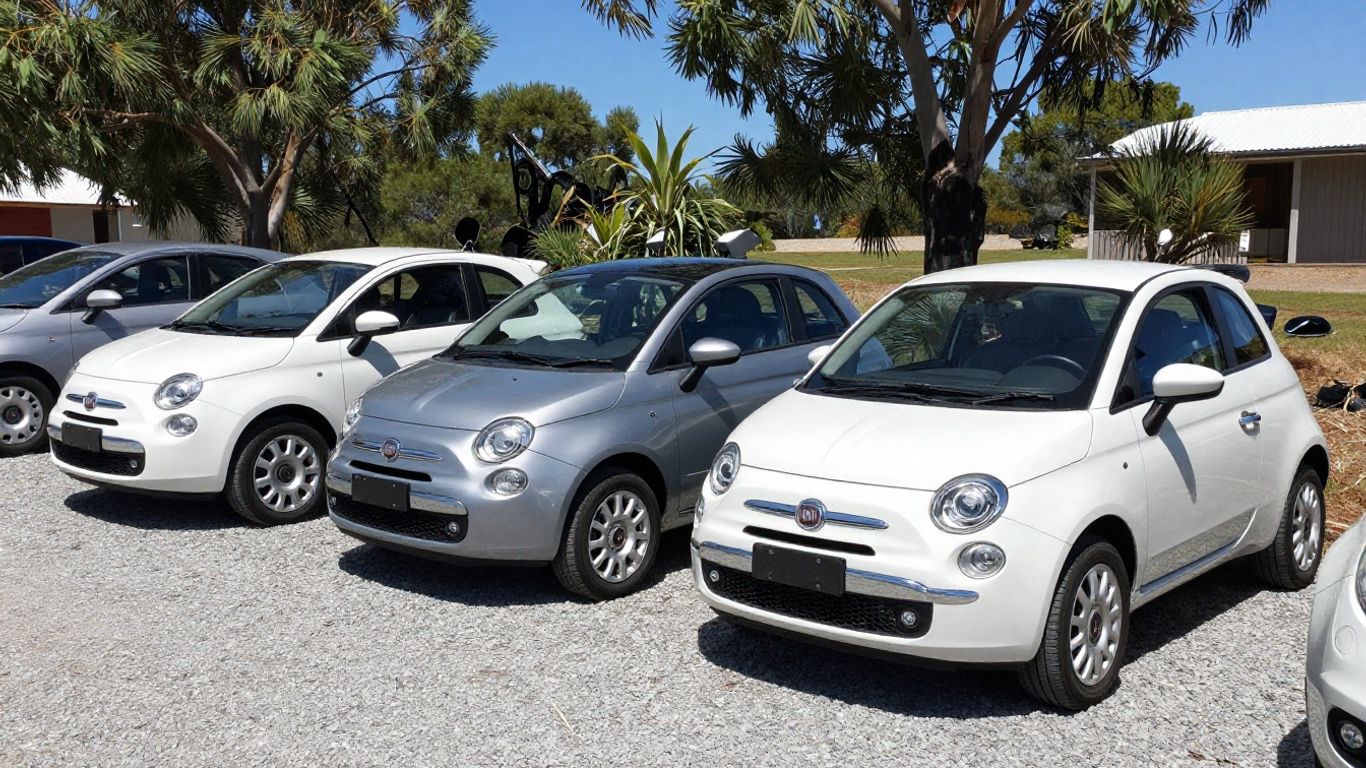
Searching locally is easier when you treat the process like a matching exercise rather than a general hunt for “a Fiat part.” Start with the vehicle details, identify the exact component, and contact sellers before setting out. For buyers looking for Cheap Fiat 500 parts Sunshine Coast – cash & carry, the aim is to reduce wasted travel while keeping enough flexibility to compare suitable alternatives.
Local auto recyclers and wrecking yards
Local recyclers and wrecking yards can be useful when you want to examine a part in person. Call first with the vehicle details and ask whether the item is physically available, already removed, and in the condition described. If it remains on a donor car, ask whether self-removal is permitted and what identification the seller needs.
A visit is most productive when you have photographs of the damaged area and know which side of the vehicle you need. “Left” and “right” can be confusing when parts are viewed from the front or from inside the car, so describe the side from the driver’s seated position and confirm it with a photo.
Online inventories and phone-based parts searches
Online inventories can shorten the search, but listings should be treated as a starting point for verification. Ask for additional photographs when the listing does not show mounting points, connectors, tyre condition, or the full painted surface. A phone conversation can also reveal whether the listed item has already been sold or is awaiting removal.
Keep a note of the seller, stock reference, quoted price, condition, and collection details. When several listings appear similar, those notes make it easier to compare the actual parts rather than simply choosing the first low number.
Fiat 500 model years, trims, and engine differences
The Fiat 500 name covers vehicles with different model years, engines, transmissions, trim packages, and equipment. Exterior shape alone does not guarantee interchangeability. Differences may affect wiring plugs, sensors, brakes, wheels, interior fittings, body mouldings, cooling components, and engine-related parts.
For that reason, avoid ordering from a photograph alone. Check whether the component came from a hatchback, convertible, or another related body configuration where relevant, and confirm details such as engine size, transmission type, steering side, and equipment level.
Providing your VIN and part number for accurate matching
The vehicle identification number is one of the most useful details you can provide because it lets a seller narrow the search to the correct vehicle specification. Add the registration details if requested, along with the model year, engine, transmission, and a clear description of the failed part.
If the old component has a stamped, moulded, or printed part number, photograph it before removal. Matching the number is helpful, but it should not replace checking connectors, mounting points, dimensions, and specification. Accurate matching saves money by reducing the chance of buying a part that cannot be fitted.
Check part condition before you buy
Condition checks are the heart of a successful used-parts purchase. A component can look acceptable from a distance while hiding bent mounts, water damage, worn bearings, or missing clips. Take a few minutes to inspect the actual item and ask direct questions before paying.
Inspecting body panels, lights, and interior components
Look along body panels in changing light, checking for ripples, deep scratches, repaired seams, and uneven gaps around mounting points. Confirm that doors, bonnets, and hatch panels are not twisted and that hinges, latches, handles, and glass are included if you need them. Paint mismatch may be unavoidable, so decide whether a lower price offsets the cost of preparation and repainting.
For lights, inspect lenses for cracks, clouding, moisture, and broken tabs. Interior components should be checked for torn upholstery, broken plastic, warped dashboards, damaged clips, and missing trim pieces. Small brackets and covers can be surprisingly difficult to source later.
Testing electrical and mechanical parts
Ask how electrical components were tested and whether the seller can demonstrate operation. Check connectors for bent pins, brittle insulation, green corrosion, and signs of heat damage. Items such as switches, mirrors, motors, lamps, and control modules may require more than a visual inspection before their condition is clear.
Mechanical parts deserve an equally practical check. Look for leaks, excessive movement, damaged threads, seized mechanisms, cracked housings, and unusual noise where testing is possible. If a component cannot be tested on site, find out whether that limitation affects the warranty or return arrangement.
Identifying wear, damage, and corrosion
Surface dirt is not necessarily a problem, but heavy oil residue, coolant staining, rust scale, water marks, or impact damage deserve attention. Inspect seams and hidden edges, because corrosion often begins where moisture collects. On suspension and braking components, distinguish between acceptable surface discoloration and damage that affects structural integrity or safe operation.
Ask what caused the donor vehicle to be dismantled when that information is available. A part from a collision may be usable, but it should be checked for distortion. A component from a flood-affected vehicle may carry electrical or corrosion risks that are not obvious at first glance.
A cheap part is only a saving when it works for the repair you actually have.
That rule is especially useful when comparing cosmetic imperfections with functional defects. A scratched trim panel may be easy to live with, while a questionable sensor or bent mounting bracket can create repeated labor and diagnostic costs.
Confirming whether the part is complete and ready to fit
Before paying, ask exactly what is included. A door may be sold bare or with glass, regulator, mirror, latch, wiring, and trim; an engine may be supplied with some accessories but not others. Do not assume that photographs show every component included in the price.
Compare the replacement with the old part while you are still at the yard or counter. Check mounting holes, clips, connectors, brackets, seals, and fasteners. If something is missing, either obtain a price for the additional item or reconsider whether the apparent bargain is suitable.
Compare prices and manage your budget
A fair comparison includes more than the sticker price. Used, aftermarket, and genuine parts can differ in condition, completeness, fit, warranty, and availability. Write down the full likely cost so that a slightly more expensive but ready-to-fit component can be compared honestly with a cheaper item requiring extra work.
How recycled-part prices are typically calculated
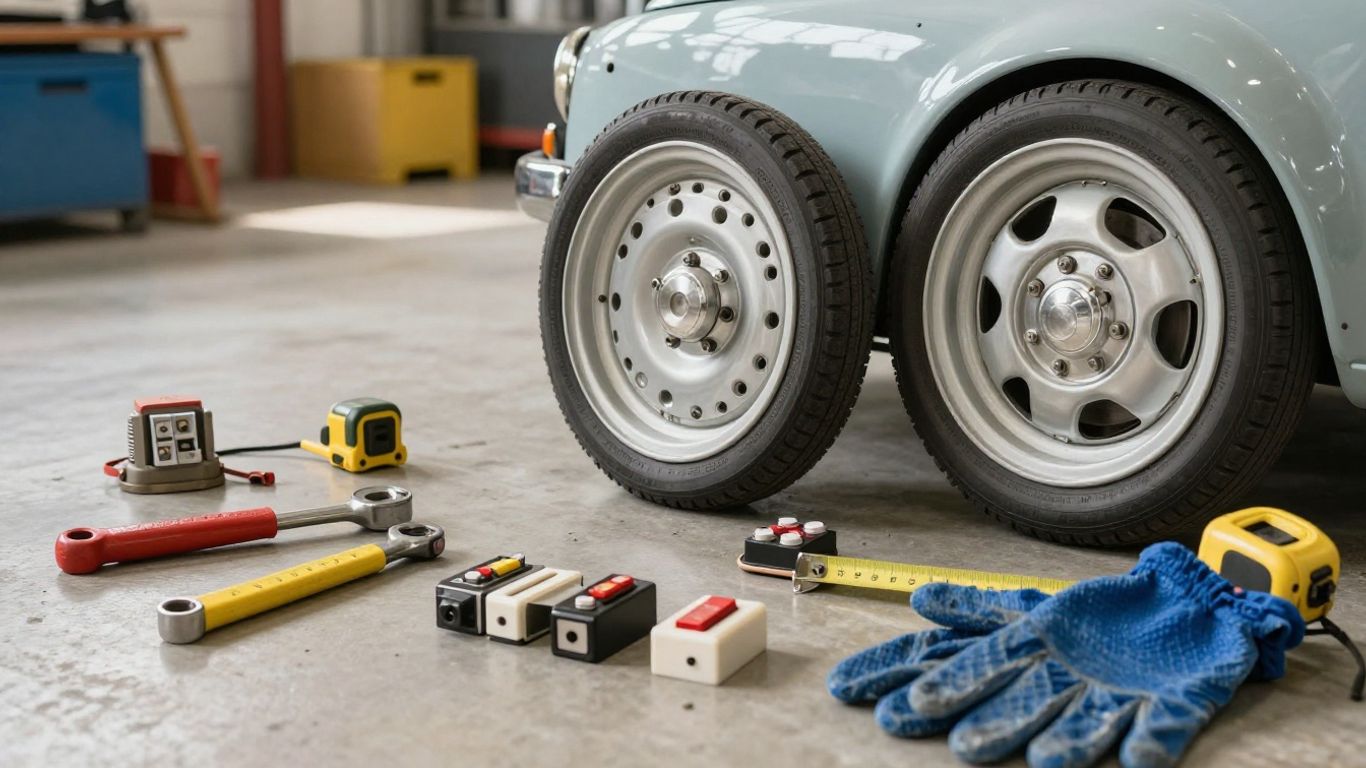
Recycled-part pricing may reflect demand, rarity, condition, completeness, testing, labor involved in removal, and whether the component is ready for collection. Large parts can also cost more to handle and transport. A common trim piece may be inexpensive, while a desirable engine or undamaged body panel may command a higher price.
When asking for a quote, describe the exact part and ask whether tax, removal, hardware, and collection are included. A written quote or message gives you something clear to compare if several sellers have similar stock.
Comparing used, aftermarket, and genuine Fiat parts
Used original parts, aftermarket replacements, and new genuine parts each suit different repair priorities. A used original panel may offer a closer match to the existing car, while a new replacement can make sense when wear, safety, or long-term reliability is the main concern. Aftermarket fit and finish can vary, so check the supplier’s specification rather than assuming all replacements are equivalent.
The right choice depends on the vehicle’s age, the repair’s importance, your budget, and how long you plan to keep the car. Use a simple comparison that includes the part, delivery or collection, preparation, fitting, and likely follow-up work.
Asking about warranties, returns, and exchange policies
Before payment, ask how long any warranty lasts, what it covers, and whether labor is excluded. Confirm whether an electrical part can be returned if the vehicle’s fault turns out to lie elsewhere. Also ask whether a return requires the original labels, packaging, or unaltered mounting points.
Cash-and-carry does not automatically mean “no questions asked,” but policies differ. Get the terms in writing where possible, especially for expensive mechanical or electrical components. Keep the receipt, stock number, and any messages describing the condition.
Avoiding hidden costs and unsuitable bargain parts
A cheap part may need cleaning, painting, programming, seals, clips, specialist removal, or professional calibration. Collection may also require a trailer, several people, or a vehicle with enough interior and load space. Add these costs before deciding that one option is cheaper.
Be cautious if the seller cannot identify the donor vehicle, explain the condition, or confirm what is included. Walking away is often less expensive than fitting an incompatible component and discovering the problem after the original part has already been discarded.
Plan a safe cash-and-carry purchase
Self-collection can be straightforward for a mirror or trim piece and much more demanding for an engine, transmission, door, or glass panel. Plan the visit around the part’s weight, shape, fragility, and removal method. Good preparation protects both you and the component.
Bringing the right tools and protective equipment
Take gloves, safety glasses, sturdy footwear, work clothes, and a torch. Depending on the arrangement, useful tools may include sockets, screwdrivers, pliers, trim tools, penetrating fluid, a breaker bar, and containers for fasteners. Do not bring tools you are not confident using around stored energy, fuel, refrigerant, or heavy assemblies.
Ask the yard what tools are allowed and whether lifting equipment is available. A part that appears simple to remove may have seized bolts, sharp edges, or hidden electrical connections. Stop if the job becomes unsafe rather than forcing the removal.
Arranging collection, loading, and transport
Measure the part and the available vehicle space before collection. Protect painted panels with blankets, secure glass upright where appropriate, and prevent loose hardware from rubbing against finished surfaces. Heavy items need proper tie-downs and a stable load floor, not improvised rope placement.
If another person is helping, agree on how the item will be lifted and where it will be placed. For large parts, professional transport may cost less than damage caused by an unstable load or an awkward lift.
Understanding removal requirements for heavy or fragile parts
Engines, transmissions, suspension assemblies, and large body panels may require a hoist, jack, stands, lifting straps, or several people. Glass, instrument panels, and painted parts can be damaged by twisting or unsupported pressure. Ask whether the component will be removed by the seller or whether you are expected to dismantle it on site.
Never work beneath a vehicle supported only by a jack. Follow the yard’s access rules and use equipment rated for the load. If fuel, oil, coolant, or other fluids are present, ask how they must be handled before removal and transport.
Checking local safety and environmental practices
Choose a seller that keeps work areas controlled and handles fluids, batteries, tyres, and damaged components responsibly. Stay within marked customer areas and follow instructions about vehicle access, lifting equipment, and waste. These practices are practical signs that the purchase is being managed carefully.
You can also ask how a removed part is prepared for sale and whether hazardous residues have been drained. Responsible handling reduces the chance of spills in your vehicle and makes the collection process safer for everyone nearby.
Choose the best parts for common Fiat 500 repairs
Different repairs call for different levels of caution. Cosmetic parts are often judged mainly by fit and appearance, while engines, braking components, and electrical modules need deeper checks. Use the following categories to focus your questions without assuming that every part is interchangeable.
Replacement doors, bumpers, and body panels
Check body panels for straight edges, sound mounting points, intact brackets, and included hardware. For doors, confirm the correct side and whether the glass, regulator, latch, mirror, wiring, and interior trim are included. Bumpers should be checked for cracks, distorted mounts, missing inserts, and sensor openings where fitted.
Color is another practical concern. Even when the paint code matches, age and exposure can create a visible difference. A panel in a close color may still be worthwhile, but include preparation and blending in the budget.
Wheels, tires, suspension, and braking components
Inspect wheels for cracks, buckles, severe curb damage, and corrosion around the bead area. Tires need attention to tread, age, sidewall condition, and damage; matching size alone is not enough. Confirm the wheel specification and ask whether the item includes a suitable valve, center cap, or usable tyre.
For suspension and braking parts, prioritize safety and condition over a small saving. Check for bent components, leaking dampers, seized adjusters, uneven wear, and damaged threads. Components with uncertain history may warrant professional inspection or replacement with new parts.
Engines, transmissions, and cooling-system parts
Ask for the donor vehicle details, mileage information if available, and the reason the vehicle was dismantled. Look for leaks, broken connectors, cracked housings, corrosion, and missing accessories. Confirm whether the engine or transmission is supplied complete or as a bare assembly, and list every component you will need to transfer from the original.
Cooling parts should be checked for damaged fins, blocked passages, cracked tanks, weak mounting points, and contamination. A radiator or fan assembly that looks clean may still need a pressure or electrical test before installation, so clarify what testing has actually been completed.
Seats, dashboards, trim, and interior accessories
Interior parts are often good candidates for cash-and-carry buying because condition can be judged directly. Look for tears, stains, broken frames, damaged clips, faded surfaces, and missing wiring or airbags where relevant. Compare the trim color and finish carefully, since small differences can stand out once installed.
For dashboards and console pieces, check every mounting tab and screw point. A cracked tab may not be visible from the front but can leave the finished installation loose or noisy. Package soft trim so it does not become crushed or marked during transport.
Mirrors, lights, switches, and other electrical items
Confirm the side, connector shape, adjustment type, lens condition, and mounting tabs for mirrors and lights. A visually similar item may have different wiring or equipment. Switches and modules should be matched by part number where possible, with questions about testing and any required coding or programming.
Keep electrical parts dry and protected from impact on the way home. If the fault is not fully diagnosed, do not assume replacing the first suspected component will solve it. A proper diagnosis can prevent buying several inexpensive but unsuitable parts.
Conclusion
A successful cash-and-carry Fiat 500 purchase comes down to accurate matching, honest condition checks, and a realistic total budget. Search local stock with the VIN and part details ready, inspect the component in person when possible, and plan collection around its size and safety requirements. With those habits, used parts can be a sensible way to complete repairs without turning a low purchase price into a costly mistake.







