

Set goals before choosing performance parts
Before you compare Fiat Abarth 595 performance parts, decide how you use the car and what you want to improve. A daily driver has different priorities from a car that spends weekends on a circuit, and a mixed-use build asks you to make some trade-offs. Start with the changes you’ll notice most often, rather than buying parts because they appear together in a package.
Define whether the car is for street use, track days, or a mix
A street-focused setup should work well in traffic, on uneven roads, and over longer trips. If you plan regular track days, you may care more about consistent braking, temperature control, and predictable handling. For a car that does both, aim for upgrades you can live with every day, and be realistic about compromises such as a firmer ride or louder exhaust.
Prioritize handling, braking, power, or sound
Choose one main goal first, then decide what supporting changes it needs. A simple comparison can help keep the build focused, especially when several upgrades sound appealing at once.
| Main priority | First area to consider | Everyday trade-off to check |
|---|---|---|
| Handling | Springs, dampers, and alignment | Ride firmness and ground clearance |
| Braking | Pads, fluid, and brake condition | Noise, dust, and cold response |
| Power | Engine tuning and supporting parts | Fuel needs, heat, and wear |
| Sound | Intake and exhaust choices | Cabin drone and local noise rules |
Use the table to identify a starting point, not a shopping list. If your goal is more confident road driving, for example, sound and power upgrades may be less useful than fresh tires and properly matched brakes.
Check your model year, trim, and existing modifications
The badge alone is not enough to confirm fitment. Record the model year, trim, engine details, and any modifications already fitted, then compare those details with the part listing. A guide to checking Fiat part compatibility can help you build a careful buying routine, and a Abarth 595 parts range gives you a view of the kinds of upgrades available for the model family.
Improve airflow and exhaust response
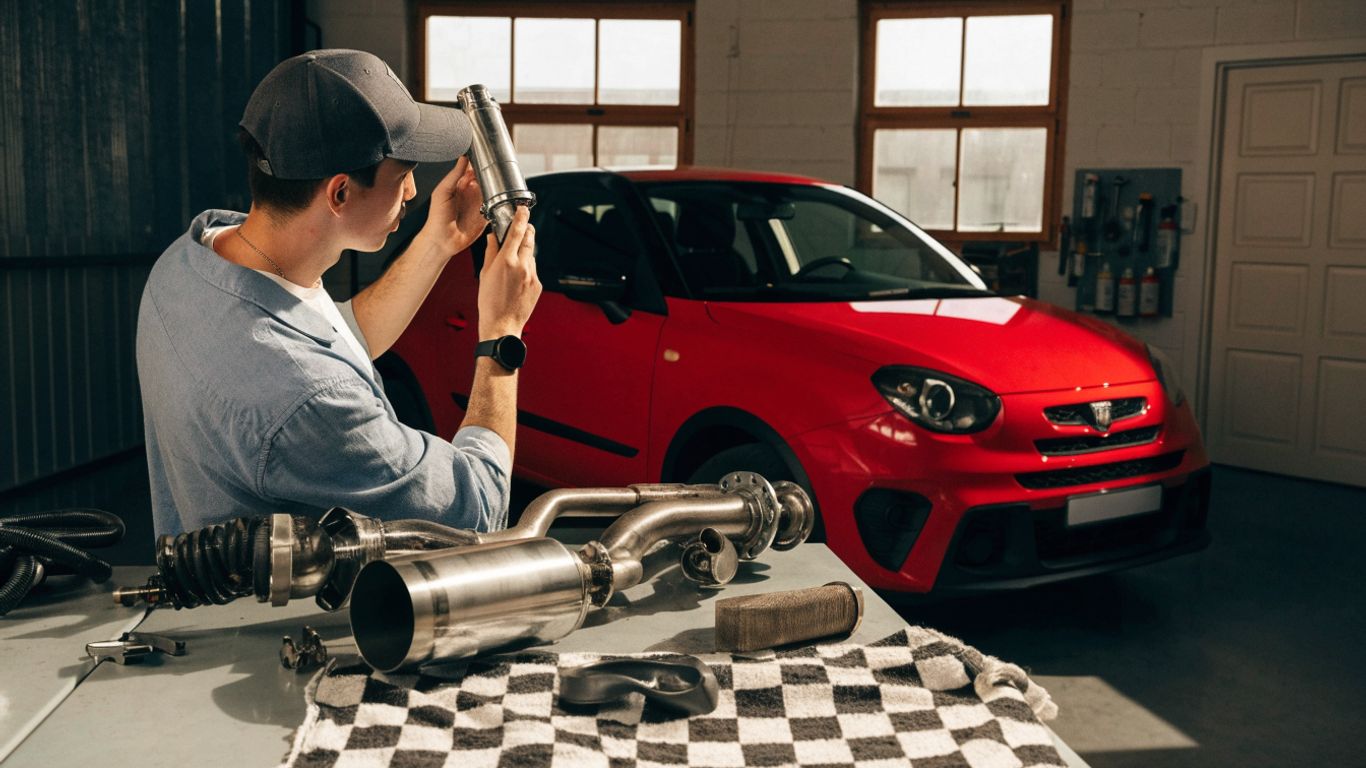
Intake and exhaust parts can change how the engine breathes and how the car sounds, but the right choice depends on your setup and priorities. A louder or more open system is not automatically a better match for daily use. Check how each part fits with the car as it sits now, including any tune or other airflow changes.
Compare intake upgrades and their heat-management needs
An intake should be judged by its complete installation, not just its filter or pipe. Consider where it draws air from and whether the design manages heat from the engine bay. On a road car, consistent operation and a tidy fit may matter more than an impressive-looking component; also check whether the intake needs any additional parts to fit correctly.
Choose an exhaust setup that suits your sound and comfort preferences
Think about the sound you want both outside and inside the cabin. A system that seems enjoyable on a short drive can become tiring on a commute if it creates too much volume or drone. Compare the expected sound, construction, fitment notes, and any effect on other modifications before choosing.
Check emissions rules, noise limits, and required supporting parts
Rules vary by location, so check the requirements that apply where you register and drive the car before ordering. Confirm whether the part is permitted for road use and whether installation calls for additional components or changes to the existing setup. This is a sensible point to pause and verify details rather than assume a part advertised for a related model is automatically suitable.
Choose engine tuning and power upgrades
More power can make the car feel livelier, but an upgrade is only as sensible as the condition of the vehicle around it. Think about fuel, maintenance, cooling, and the parts that transfer power to the road. Keep your goals modest enough that the car remains usable in the conditions you actually drive.
Understand what an ECU tune changes
An ECU tune changes engine control settings, and the exact changes depend on the tune and vehicle. Ask what the calibration is designed to alter, what fuel it expects, and whether the installer recommends supporting parts. Just Fiat supplies engines and clutches as part of its Fiat parts range; having the condition of related components checked can help you plan a modification responsibly.
Match tuning to fuel quality and the car’s condition
Before tuning, make sure the engine is up to date on maintenance and that there are no unresolved warning lights, leaks, or running issues. Follow the tune provider’s fuel guidance, since an upgrade that assumes a particular fuel may not suit what you can reliably use. If the car has an unknown service or modification history, establish a baseline with a qualified mechanic before changing its calibration.
Consider cooling and clutch demands as power increases
As engine output rises, heat management and drivetrain condition deserve more attention. Ask whether the planned setup calls for cooling changes, and check for signs of clutch wear before adding extra load. A power upgrade should be considered alongside the car’s age, condition, and intended use—not as an isolated part.
Upgrade suspension and chassis control
Suspension changes affect comfort, clearance, and the way the car responds through corners. The best setup is not necessarily the lowest or stiffest one; it is the one that supports your roads and driving habits. Just Fiat supplies shock absorbers and other suspension components, which can be relevant when you’re assessing worn parts as well as planning upgrades.

Compare lowering springs, coilovers, and dampers
Lowering springs can reduce ride height while retaining a simpler setup, while coilovers combine springs and dampers in an adjustable package. Replacement dampers may be the more appropriate choice if your priority is restoring control rather than changing the car’s stance. Compare the intended ride height, adjustment options, comfort, and compatibility with the rest of your suspension.
Select sway bars and braces for your handling goals
Sway bars and braces can alter how the chassis responds, so avoid choosing them by appearance alone. Consider the handling balance you want and how the parts interact with your existing springs and dampers. If you’re planning several changes, make them in stages so you can assess the effect of each one instead of losing track of what improved—or worsened—the car.
Preserve ride comfort and check alignment after installation
A lower or firmer setup can change how the car behaves on broken pavement and steep driveways. Discuss ride height and intended use with the installer, and have the alignment checked after suspension work. Just Fiat offers Fiat parts including shock absorbers, so if you’re replacing worn components, confirm the correct fit before installation and consider whether an upgrade is genuinely needed.
Build confidence with brakes, wheels, and tires
Brakes and tires are central to how confidently you can use the car’s power. A performance part cannot compensate for worn components or an incorrect fit, so inspect the basics before changing specifications. Match your choices to the weather and roads you encounter, not just occasional spirited driving.
Choose brake pads and fluid for your driving conditions
A road pad should be suitable for everyday temperatures and use, while repeated hard braking may call for a different friction material and fluid. Consider cold response, noise, dust, and service intervals alongside heat tolerance. Just Fiat lists Fiat brake parts, including pads and discs, so verify the required part against your exact vehicle details before replacing anything.
Check wheel fitment, clearance, and offset
Wheel diameter is only one part of fitment. Check width, offset, bolt pattern, brake clearance, and the tire size that will be used with the wheel. If the car has modified suspension or brakes, confirm those changes too, since they can affect clearance even when the wheel is listed for the same model.
Select tires that balance grip, weather, and road use
Choose tires for the conditions you actually face, including wet roads, cold weather, and regular commuting. A very grippy tire may involve trade-offs in cost, wear, or wet performance, so compare the full specification rather than relying on one headline rating. Tire condition and correct pressure also matter; check both before judging whether the car needs a different setup.
Plan a compatible and reliable upgrade path
A good build comes together through careful sequencing and fitment checks. Start with the car’s condition, make sure each new part works with what is already installed, and keep records of changes. When you shop, look for clear compatibility information and ask for help if the listing does not match your exact version.
Verify fitment against the exact Fiat Abarth 595 version
Check the model year, trim, engine, and any relevant production or market differences before ordering. Keep part numbers and vehicle details together, and compare them with the seller’s fitment information rather than relying on a broad model label. If the information is unclear, confirm it before purchase; a part that looks similar may still require different mounting or supporting components.
Install supporting parts before increasing power
A staged approach makes it easier to spot problems and avoid spending twice. Before adding power, review the car’s maintenance and supporting systems in a practical order:
- Check for existing engine, cooling, or drivetrain problems.
- Make sure tires and brakes are in good condition.
- Confirm that planned supporting parts fit the car and each other.
- Keep records of installed parts, service work, and tune settings.
This sequence helps you deal with reliability and safety basics before changing engine output. It also makes later troubleshooting less confusing, since you can trace when each change was made.
Review warranty, insurance, and local compliance considerations
Before modifying the car, check your warranty terms, insurance requirements, and local road-use rules. Ask your insurer whether declared modifications affect your cover, and keep receipts and installation records. When buying parts online, review fitment, condition, returns, and total costs before you commit; careful preparation can make the process less stressful.
Conclusion
Choosing Fiat Abarth 595 performance parts is easier when you begin with a clear purpose, confirm fitment, and treat supporting systems as part of the upgrade. Make changes in a considered order, keep the car’s real use in mind, and verify local requirements before installation. A well-matched setup is more useful than a collection of parts chosen without a plan.
Frequently Asked Questions
What should you upgrade first on an Abarth 595?
Start with the car’s condition, tires, and brakes, then choose an upgrade based on your main goal. Address worn or faulty parts before adding power or changing the suspension.
Are performance parts suitable for a daily-driven car?
Many upgrades can suit daily use, but comfort, noise, ground clearance, and maintenance needs vary. Check how a part behaves in ordinary road conditions before choosing it.
Do you need a tune after changing the intake or exhaust?
That depends on the specific parts and the vehicle setup. Check the component maker’s instructions and ask a qualified installer whether the change requires revised engine calibration.
How can you confirm a part will fit your car?
Use the car’s exact model year, trim, engine details, and any existing modifications. Compare them with the part number and fitment information, and ask for confirmation if anything is uncertain.
Should you install suspension and brake upgrades together?
Not necessarily. Plan each change around your needs and budget, and make sure the combined parts are compatible. After suspension work, have the alignment checked.
What should you consider before increasing engine power?
Check maintenance history, engine condition, cooling, fuel requirements, and clutch condition. Also consider whether the tires and brakes are appropriate for the way you intend to use the added power.
Do modifications affect road legality or insurance?
They can, depending on the part and where the car is registered. Check local compliance rules and ask your insurer how modifications should be declared before fitting them.







